Fantasy short. An angel tells a curious story.
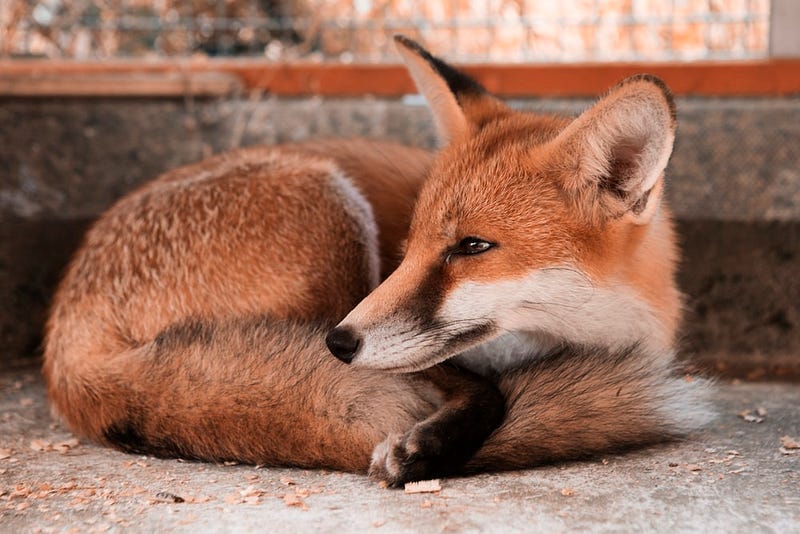
In this one, an angel and his park warden boyfriend are slow and lazy in the summer evening heat, and the angel tells the warden a story.
More with Gryff Gordon and Perseverance-before-God! 4.7k, fantasy slice-of-life and a slightly spooky story.
Content warnings for animal death and butchery in the context of hunting, culling, and native population preservation respectively.
Gryff and Percy first appeared in Warden Gordon and the Angel in the Woods.
https://johannestevans.medium.com/warden-gordon-and-the-angel-in-the-woods-65d47bc16b72
It was late in the evening, but the sun wasn’t even beginning to set yet — it wouldn’t go down for hours, and even then the skies would cling onto that deep, peach red that came before night set in when it came to the summer months before it finally faded to black.
Gryff was sitting back in the armchair beside the fire, which he’d had to fight a fox for — when he’d come into Percy’s house and come up the stairs, she had chattered at him, her ears back and her hackles raised even before he’d approached the chair, and Percy had laughed at his caution.
“Think she’ll bite you?” he’d asked.
“A vixen with teeth like that? Yeah, I expect so,” said Gryff, and Percy had approached her instead, picked her up under the elbows and tossed her onto the bed instead, as easily as one might pick up and toss a cat. She’d fallen onto her back, looked abruptly playful, her paws in the air. “I don’t expect them to like me like they like you. I just wish they didn’t hate me.”
“She doesn’t hate you,” said Percy, setting a kettle over the fire, and Gryff sank down into the chair she’d vacated, watching as she curled up into a ball again. She was using Gryff’s cottage as a convalescent home while she recovered: her back leg was bandaged around with blue gauze, and while Percy had somehow communicated to her not to bite or pull at it, Gryff was aware that the reason she was growling at him so nastily was likely because she was injured. “She just doesn’t see that she should cede anything to you just because you’re bigger than her and walk on two legs, that’s all.”
“Good for her,” said Gryff, and leaned back further in the chair, his arms resting on the chair’s arms, and that made Percy laugh.
The night air was balmy and humid, and although Percy retained a kind of strange modesty in his clothes — he didn’t wear shorts, and while he’d never said anything along those lines, Gryff was distantly of the understanding that he thought appearing with his knees or elbows on display in public was tantamount to nudity — the fabric he wore was very thin, a white linen shirt and pale linen trousers.
The wings that sprouted out from behind the angel’s ears were not as oily as they were in the winter months, and now and then when they moved or when he fluttered them, there’d be bird dust.
“Dhanmeet said you were laying flowers on one of the memorials today,” said Gryff, and Percy turned to glance at him. Gryff wasn’t sure what to make of his expression. “Sorry, not trying to intrude. Just wanted to ask in case you wanted to talk about it.”
“Benjamin,” said Percy, sinking into the chair across from him, folding his legs under his body. “Benny. He died in 1983, I always like to put fresh flowers there on his birthday — there’s no actual grave plot, his ashes were scattered, so the plaque is all there is.”
“How old was he?” asked Gryff.
“He wasn’t so old. It was apoplexy, I think.”
“A stroke?”
Percy spread his hands, shrugging his shoulders, and Gryff sighed.
“Sorry,” he said. “For your loss. You knew him well?”
“Yes,” said Percy quietly. “Yes, I think so. I met him when he was a young boy — it was a complicated matter. Complicated…” He trailed off, looking into the fire, and then said, “You’re frightened of the woods?”
“No,” said Gryff.
“Of the fae? The People?”
“Not as much as I was,” said Gryff. “Cautious, now, but not scared. I guess I used to be, but only because I never saw them, didn’t know how to deal with them first-hand. The People still freak me out a bit, but I only ever see them when I’m out with you. Benny was fae?”
“Oh, no,” said Percy. “No, no, he wasn’t.”
“You want to talk about it?” asked Gryff uncertainly, and Percy gave a careful inclination of his head, his wings back.
Perseverance was a quiet man by nature — he wasn’t shy, Gryff didn’t think, but he avoided people and crowds in the same way he covered his skin. It wasn’t fear, but modesty. Gryff wasn’t sure if it was right to call it chastity, but it was part of the same virtue.
Gryff had asked him before, if all the Puritans he’d known had been like him, and Percy had laughed, and told him no.
“The ones that wanted to be like me do so because they think hot blood is a sign of sin,” he’d said. “But my tranquillity is my nature, just as hot blood was theirs. It does not do to go against one’s nature — if one must do so to realise one’s morality, one either lacks understanding of that morality or one’s self.”
Tranquillity might be in Percy’s nature, but the modesty was learned, Gryff knew that — he knew that because he’d seen him give orders, seen him in arguments, listened while he told Gryff he was stupid without ever saying the word.
Gryff liked him when he did that.
Percy said a lot of fucking shit like this anyway, and Gryff rarely bothered to keep asking questions when he dropped one of these philosophical or religious paragraphs, because he was never able to follow what came after, and rarely followed what came first.
It was a floral tea today, some of the dried flowers that Gryff had helped Percy pick in the late spring. He didn’t know any of their names, but Percy had known a hundred names for all of them, and if Gryff asked, he could tell them what medicine they were used for, some of their apothecarial qualities — but what he liked to tell Gryff was the stories that came with them.
These flowers, he said, had grown on the grave of this person, or grown near plague-ridden homes as a warning; the seeds for these had come from the blood or sweat or flesh of this hero or this spirit; these flowers resembled the sun or this face or this symbol.
Gryff didn’t remember it until he was looking at the flowers in question, and then he remembered more of it than he expected.
There was still a part of him that wanted to tell Percy not to pick flowers, ingrained in him from working in mundie parks, before swapping over to magical ones — he’d done it once, and Percy had looked at him in such charmed, wide-eyed bafflement that Gryff had forgotten how to talk, and it had taken him a few minutes to remember exactly why he’d said it, to explain overharvest of wildflowers.
“Population’s too high,” said Gryff, and Percy had scoffed. “What? Too many people plucking too few flowers.”
“The population is fine,” he’d replied. “More forests, more flowers — like we have.”
“Well, the mundies can’t do what we do,” said Gryff.
“I expect they’d say that too,” had said Percy sceptically.
Percy was sitting cross-legged on the bed beside the vixen, sipping at his own mug. He was cupping it between his hands and leaning back against the sill, elbow on the ledge. There were birds on the other sill, a few of them lined up and peering in; on the other side, two squirrels were wrestling.
It made him anxious sometimes, when they did that, fought on the ledges, but he’d seen them fall, and they always righted themselves before they hit the floor.
Percy didn’t eat meat, but when Gryff had entered the cottage yesterday, he had been calmly and smoothly butchering one of them. Gryff had stood still, stared at Percy’s blood-covered fingers and palms and the sharp blade in his hand, the mixing bowl full of organs on one side, the plates of butchered meat on the other side.
He’d noticed years ago when he’d started at Llallwg that he didn’t see grey squirrels the way that he did in the mundane ones, but he hadn’t much thought about the whys.
“I’m nearly finished,” Percy had told him pleasantly when he’d realised Gryff was staring, just the same as if Gryff had walked in on him gardening or doing needlework. “I’ve already done the rest.”
He hadn’t looked in the bucket of skeletons that were bleaching — Percy would use the bones for something — but there had been at least half a dozen furs and tails that Percy would trade to someone for something.
The vixen lifted her head and laid her chin on top of Percy’s bare foot. Parts of her fur were the same colour as Percy’s red hair, bright and burnished, a brighter colour than seemed natural, somehow, even though of course it was natural.
“You’re struggling to focus,” said Percy.
“It’s the end of the week, and I’ve been working a lot,” said Gryff. “It’s hot. I’m tired.”
“You want to trade places?” asked Percy. “I don’t mind if you want to sleep.”
“No,” said Gryff. “It’s okay. I’ll listen, if you want to talk about, uh… Anything.”
The silver scales on Percy’s faces shone in the red light that came in, reflective enough that they made dappled lights appear on the shadowed parts of the room. Gryff had thought, when he’d first seen those scales, that they’d be cold to the touch when he reached out for them, but they weren’t — they were rough, like chicken’s scales were, and if you pressed down on the parts of Percy’s skin that looked human, you could sometimes feel the scales underneath.
And when he bled, his blood was silver — not just silver, but thicker than human blood, filmy so that it stuck to your fingers, and it was hard to wash off. His scales came off when he cut himself, and it took a little while for them to grow back after the skin healed, and he treated his wounds with fresh honey.
“Do you tell your coworkers we have sex?” asked Percy.
“No,” said Gryff. “I announced it in my newsletter, though, does that count?”
“I don’t know what a newsletter is,” said Percy, abruptly cool, “but I am choosing to believe you’re being facetious.”
“Yes, Perseverance, I am being facetious,” said Gryff. “No one asks — I don’t really have that kind of relationship with anybody. To talk about sex, I mean, or my personal relationships.”
“Dhanmeet doesn’t ask?”
“No. He’s my boss, I think it’d be weird if he asked.”
“He’s your friend.”
“Yeah, but he’s also my employer. There’s rules.”
“He doesn’t ask me either.”
“You want me to ask him to?”
“No, I don’t want to talk about sex with other people.”
“Then why are we having this conversation?”
Percy shrugged his shoulders, reaching up and curling two of his fingers through his hair, wrapping red strands of it around and around his fingers.
“Are we having too much sex?”
“No.”
“Too little?”
“No.”
“You don’t like the sex we have?”
“I don’t really care about it,” said Percy. “I just like to be close to you. The sex is by the by.”
Gryff smiled at that, and drank more of his tea, tried to remember what the little pink and white flowers looked like before they were dried, what stories Percy had told him about them.
“Do we think we have sex too little?”
“No,” said Gryff. “It’s less sex than I’ve had in other relationships, but the sex we have is… different, I don’t know. Nicer. Doesn’t feel as rushed — but it doesn’t feel like a chore, either. Maybe my drives are more like yours than the other people I’ve had sex with.”
Percy nodded his head.
“Did you date Benny?” asked Gryff.
“Hm?” asked Percy, looking up, and then he shook his head. “No, no. No, that wasn’t…” He shook his head and laughed quietly. His hair bounced when he shook his head like that, and his wings twitched, flickered, the silver feathers shining a little under the light even though they weren’t as glossy as usual. “If I tell you the story, I’ll tell you the story the way he told it — to other people. I don’t much factor into it, you see, until the end.”
“Okay,” said Gryff.
“It was his eighth summer,” said Percy softly. “He’d been born in the summer. His blood was made for it. It was a Sunday and all of the farm work had already been completed, the goats allowed out to graze, the coops emptied and cleaned. His brothers and sisters were very interested in seeking out the travelling fair that had come into town, mummers and so on, but Benny never cared for the noise and the shouting, or the drumbeats. They went right through him, all those loud noises — they didn’t just hurt his ears, but they made his body ache, his chest, his skull. All of him.”
“He was autistic?” asked Gryff.
“You know I don’t know what you mean when you use words like that,” said Percy, although Gryff wasn’t sure if he was irritated at being interrupted or at Gryff using one of his “modern” words. From what Gryff had learned, Percy picked and chose what words he thought were modern from moment to moment, depending more on his mood than the word itself. “He was what I just told you he was.”
“Okay,” said Gryff placatingly, and Percy leaned back against the window, head right back so that this hair was hanging down. One of the magpies on the sill, quite casually, reached out and plucked free a bent feather from one of his wings, and Percy fluttered them and smiled a close-lipped smile.
Gryff looked at the column of his throat, at the silver scales and the way they looked slightly different when the skin was stretched out like this, more close together, somehow.
“He wasn’t the only one in his family who wasn’t going to the fair,” said Percy. “His grandmother wasn’t going either, nor two of his aunts, and they stayed on the farm as everyone else went. He informed his grandmother after they’d broken their fast that he would be walking some ways into the wood, keeping to one of the nearby streams. That he planned to take a rod and net and bring some fish home, but that he mostly intended to entertain himself by playing. Some ways upriver, over the past few weeks, he had been entertaining himself by building himself a house of stone off the water.”
“A house of stone?” repeated Gryff, and Percy nodded his head.
“He had dug himself a foundation to one side of the river and laid a hard bed of stone before layering it with woven sticks, and then with wet mud had laid another layer of stone. This foundation set in place, he had collected a great many larger stones to serve as bricks, and having made himself a cement of river mud and clay, he was building a rounded hut for himself, one that would later serve as a hunting blind, or simply a sheltered place to fish from when it rained.” Percy smiled slightly. “He was nearly finished on the day he went out, and some of his siblings had observed his work already — they knew where it was, as did his father.”
Gryff nodded, and Percy set his mug aside, laying his hand on the back of the vixen’s shoulders and gently scratching through her fur. She was asleep now, her face slack, head mashed into the side of Percy’s knee. Downstairs, Gryff heard the familiar sound of a boar’s hooves on the stone floor — funny, how he could tell the difference now between a boar and a deer by ear — before he heard the equally familiar sound of it snuffling, sighing, and collapsing to the cool stone.
“He began to lay his roof on his little stone house until he was finished, and then sat, and rested,” said Percy. “He had walked not very far into the forest, less than two miles — only a little more than one, in fact. His work consumed him, and he applied himself to it, as he always did, with a singular focus — he enjoyed the way his labour concentrated his being, his consciousness, his physicality, all to one target. There was a deep satisfaction that came with work that occupied both his body and his mind. Benjamin was a mundie, but he knew enough of the fae to be wary of them. He knew not to tread over natural boundaries, not to unsettle hawthorn or other fae plants, not to follow strange music or bells unfamiliar to him. The man who came upon him did not seem to him to be fae.”
Gryff stood up, picking up the pot and walking over to pour Percy more tea, which Percy took happily, leaning in from the window and giving Gryff a small, affectionate smile.
“He was not finely dressed,” said Gryff. “He wore a green chemise and simple trousers, simple, home-made shoes — he wore no coat or jacket, but the weather was very warm, and this was not remarkable. His eyes were green, a dark green, not peculiar or bright in their shade; his beard was neatly trimmed, his hair recently cut. He had two rabbits, recently caught, slung over his shoulder, and a pheasant.”
Something must have shown in his expression, because Percy looked up at him and tilted his head. “You know him?”
“Not then,” said Percy. “Not yet.”
“No, not Benny. The man.”
Percy shook his head again. “Benny didn’t know him either. He looked to be thirty or forty, maybe. He asked Benny what he was doing, and Benny told him — he’d been enjoying his work, was excited to talk about it. He explained his design, the angle he’d used in layering his brick, how he’d made his cement. He asked where the stranger was from, and he said he lived just over the hill, that he was going home. It was later in the evening than Benny had realised, because he’d been so focused on his work, and he’d caught no fish. The man said that if he would like, he could come and eat with the man and his family, and that he had no fish to offer, but if he would consent to letting his family use the blind for as long as it was there, he might pay him in kind, with flour or smoked meat, whatever he wanted from their larders.”
“That’s weird,” said Gryff, sinking down onto the bed beside him, on the other side from the vixen, and Percy leaned into his body, laying his cheek on Gryff’s shoulder. Gryff wrapped his arm loosely around Percy, stroking his knuckles over his wings.
“That a stranger invited him to dine?”
“That’s not that unusual, I suppose,” said Gryff. “It was more normal to invite strangers to come eat with you, right? A hundred years ago. But wanting a kid’s stone blind thing?”
“It was well-made,” said Percy.
“Why did they need permission? Why didn’t they just use it?”
“Politeness,” said Percy. “Respect.”
“He was fae, then?” asked Gryff, and Percy nodded, scaley cheek slightly rough against Gryff’s skin through the thin fabric of his shirt.
“Benny agreed, he said it was a very kind offer, and that the gentleman needn’t offer anything at all for the use of his blind — that he’d made it for the pleasure of the work that went into making it, and that he was quite content for it to be used by anybody. The man insisted. They talked a while, abut this and that — the gentleman had three children of his own, and told Benny a little about them, and they talked about the autumn crop that would come later. It had been a hot summer, and quite a humid one — they discussed this, too. It was casual talk, nothing of great import, nothing very lofty. Benny was only eight, after all.
“The man’s house overlooked a hill, and was very close by to a flour mill, which he informed Benny that his brother operated. Benny met some of his children, they talked and played together, and they all ate a large meal around a long table, much the same as Benny did at home. Being summer, it was a night like this one — even as the sun sank down beneath the horizon, there remained a great deal of light, such that it was hard to judge the time. Benny sat down and rested his eyes a moment, and without meaning to have, he fell asleep. He woke a few hours later, apologised profusely, and they said not to worry at all about it.
“They were a very hospitable family,” said Percy softly. “Not remarkably so — they treated Benny, in fact, in much the same way Benny’s own family treated visitors. They were a large family, and what they had, they had to happily share — they thought nothing of inviting someone else in to join them. Benny felt very at home with them. They were accommodating, kind, but didn’t ask him too many questions or pick at him, you know. They gave him a loaf of bread and some smoked parcels of pheasant to take home with him, packed into a basket, thanked him for the use of the blind.”
It was hard to see Percy’s expression with Percy’s face leaned against Gryff’s chest like this, but he could hear his voice, quiet and pensive, and see the slow, idle motion of Percy scratching at the vixen’s ears.
“He walked first down through a wheat field which he had never seen before, and in fact seemed larger than was possible — he did not recall having passed through the field the night previous, but then, it made sense that the field should be there, because he had stayed with a family of wheat farmers. He didn’t recognise the other houses he saw, nor the crossing over the river, but when he reached the treeline, and came under the shadow of the tree canopy, it was as though something popped in his understanding, and quite abruptly, he knew precisely where he was. He turned his back to look behind him, and saw what he usually expected to see — trees, just trees, and no field whatsoever, let alone a stone bridge over the water.”
The hair on the back of Gryff’s neck was standing on end, and Percy stroked the back of his knuckles over the gooseflesh that had broken out over his arm.
“He felt nervous, uncertain, but it was a late summer’s evening, and he was still groggy from his nap, he assured himself. But he walked down, took to the path, which seemed slightly different to before, and the forest seemed to go on for too long. He was lost. He thought to himself that he’d gotten turned around, and so he went to the nearest house he could see, a stone-built thing with a garden.”
“This house,” said Gryff. “Your house.”
“Mm. I had never seen him before, and didn’t recognise him — he told me his family’s names, but I didn’t recognise them either. This wasn’t a huge surprise, you know I’m not tremendously sociable. I walked him to the Visitors’ Centre, which he didn’t recognise either.”
“They picked him up and dropped him somewhere else?” asked Gryff.
“No,” said Percy. “He was in the same place — when he talked about the stone blind, I knew precisely where he meant. It had begun to crumble a few years before, and had finally collapsed that summer.”
Gryff felt slightly sick as he asked, “How many years? Was he…?”
“I don’t know,” said Percy, “but no one alive and in the area knew his family or their descendants. And — Gryffin. I built my house here in around 1490, I think, or thereabout that time. The park wasn’t established until thirty or forty years later, after Queen Gwenhwyfar’s death. I remember the blind, then — it was firmly standing, but moss had grown over its outer surfaces. It had been established for at least some years.”
“Why the fuck did they do that?” asked Gryff. “What, because that’s what the — the contract stipulated, that they’d pay him for as long as the blind was there?”
“I think so,” said Percy. “At the time, I asked quite a few local fae families, in a few villages, and of course some of the employees here reached out to do the same, but no one knew of the flour mill particularly. It’s possible that the fae lied to me at that time, but I don’t think they did — I didn’t have a name then, wouldn’t, for quite some time. They found me complex to deal with because of this.
“It could well be the family didn’t do it on purpose — that would strike me as likely. The bread they gave him was mundane, not made with any magical grain, let alone a fae one, and they didn’t ask him his name particularly, but they used names freely with one another, and no secret or contract was made of them. I say they were fae because it is obvious that he went to some different dimension out of time, but it may be that they simply crossed through fae lands, over their borders, and that the people themselves were human.”
“Was he okay?”
“He was,” said Percy. “As alright as possible, I think. He went to a children’s home in Camelot, and in fact received some special dispensation from the Crown, sympathy for his situation. He was housed and educated, of course, but even once he was grown, he was able to purchase land for himself. He became a builder. He visited now and then. He was a kind young man, and later he was less young, but still kind. I don’t think he was very angry or bitter about what happened to him — he thought, as I do, that it was likely simply an accident or a quirk of magic, not anyone’s fault particularly. As I said, he met the family, he didn’t think they would do such a thing to harm him.”
“What, like they couldn’t be kind like that and still fuck him over?”
“They could,” said Percy. “But it was not his feeling that this was what happened, and having heard his account, I can’t say I disagreed.”
Gryff curled his fingers through Percy’s hair, scratching the tip of his pinky and his thumb against where his wings adjoined the side of his scalp and making him sigh quietly, body relaxed. “You were close?”
“No, not really. But we were friends, I think, and I was someone who had some understanding of the world he had come from, the life he’d lived, before he was transplanted to somewhere else entirely.” Perseverance leaned in closer, wrapping one of his arms around Gryff’s middle and leaning his cheek in against Gryff’s body. “I’m sad he’s gone, but I think he lived a fine life, given the circumstances. Would you like to watch something on your telephone?”
“Yeah, I have battery,” said Gryff. “Whatever you want. You’d come looking for me, right? If I went missing like that?”
“I would not rest until I found you,” said Percy. “My attachment to you aside, you have a family who would miss you. I shudder to think what his family thought of their son, gone from them. Finding his life’s work complete, and him… gone. Such a big family, too, a lot of people to mourn his loss. Mortality rates for one’s children were far higher in those days, but a loss is a loss, and a missing child is an ache with no ending. Hope punctuates its continuity.”
“Hope is a virtue?”
“A theological virtue, yes,” said Percy. “Thank you. For listening. I don’t want to talk about it anymore.”
“Okay,” said Gryff, pressing a kiss to the top of his head, and he shimmed his phone out of his pocket. “You know, we could watch more stuff if you got some electrical outlets. I could get you a television.”
“I’m not having a television in my home,” said Percy disgustedly, and carefully stretched out his legs alongside their vulpine friend, using Gryff as a pillow as they both looked to the screen.
Gryff must have fallen asleep, because when he blinked awake, the skies had darkened from red to a deeper purple, and Percy was holding his phone to keep watching.
Leave a Reply