Horror short. A farmer tries to impress his new neighbour.
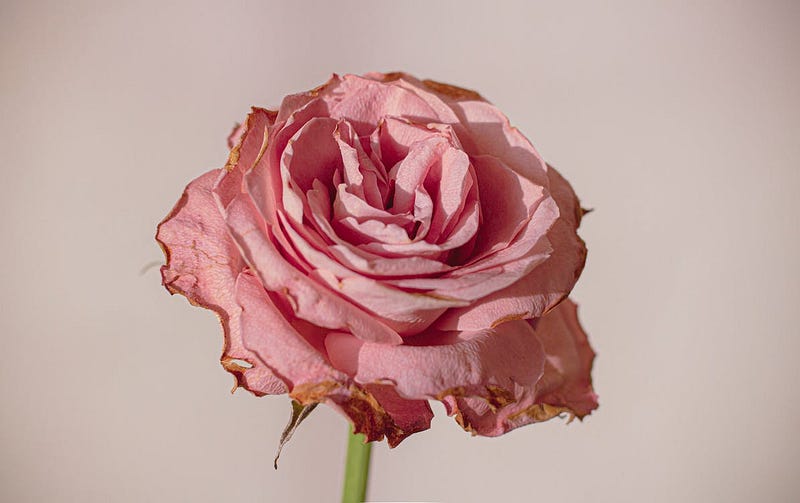
2.6k, rated M. A chicken farmer tries to impress his new neighbour by growing him some flowers, but everything that he grows dies. Adapted from a TweetFic.
Jacob’s trade, in actuality, is handyman, but he does all sorts in and around the area, uses the skills his parents had given him.
His father had been a carpenter before he’d died, and his mother had been a prize-winning gardener in the area for years until she’d gone with her second husband to live in Cornwall a few years ago.
Jacob hardly minds that that’s what she wants to do — she’d been so apologetic going, worrying about him running the farm by himself, but they’ve only ever had a small plot, and he’s never had trouble keeping track of the chickens himself. She was getting on and on in her years, nearly seventy when she’d met Hamish after nine years widowed, and the work had been wearing on her enough that he was really quite glad she’d be so far away and no longer feel obligated to help when it was increasingly beyond her ability.
Apart from keeping track of the girls and setting their eggs along the road to sell at the Barnsleys’ farm shop, he does all manner of things in and around Chesterton town — apart from his own garden, where he’s won a few ribbons for his own rose varieties apart from his mother’s own awards, he does the beds outside the village library, he does the flowers in Burnleigh’s central square, and he always wins this or that at the annual festivals — for his flowers or for his bramble jams, occasionally for flower-arranging, although he doesn’t do that sort of thing too often.
He likes to keep busy, is the thing, and so he’s often doing this or that and getting paid for it, mending fences, helping people repair their rooves or their sheds or help with this or that on other people’s farms, minding things for them when people are away.
The new neighbour is called Piers Hoult, and he lives about a mile down the road just on the edge of the village proper in a nice, fancy little cottage that had used to belong to Mr and Mrs Steele, before Mr Steele had died, and Mrs Steele had gone to live in some sort of residential home close to their grandchildren in the city.
He comes over from The Daisies one Monday morning on foot — he doesn’t drive, and when he goes into the city, he rides an old-fashioned bicycle — and knocks on Jacob’s door, stands on his doorstep.
He’s very pretty, except that Jacob feels that word catch in his head like it’s not the right sort of word — Piers Hoult is undoubtedly handsome, isn’t particularly feminine or girlish-looking or any of that, but he’s… He’s beautiful, is what he is. He’s got big, dark brown eyes that glint in the morning sunshine, his hair thick, dark, and glossy, and his lips are carved into a perfect cupid’s bow, and his skin is a sort of creamy white colour, shined almost to a polish.
“I’m so sorry to bother you, Mr Raine,” he says, wringing delicate hands with beautiful pink nails that have been buffed to a shine. He’s got a very soft voice, barely more than a whisper, but it’s warm and honeyed, sweet. “I’m sure you’re terribly busy, as ever — but would you have any time in the week, do you think, to give me some tips for gardening and that sort of thing?”
“Gardening?” repeats Jacob, drying his hands off on the towel he keeps in the hall, still wet with suds from the washing up.
“I’ve been trying desperately to grow some flowers,” says Piers in his warm, quiet voice. “And I’m having no luck at all.”
The Daisies is mostly stonework in the back and front garden — the Steeles had never been much for gardening.
“Of course, I can help,” he says immediately, unable to hold back the immediate assent. “Let me grab my coat.”
Piers Hoult, he decides in the coming weeks, is cursed.
There’s nothing wrong with his fucking soil, that’s for certain — the Daisies isn’t far from Jacob’s farm, and even if it was the soil, any sort of compost in pots Jacob brings around doesn’t seem to do anything. He fills in the flowerbeds that the Steeles had just had pebbles in, and nothing grows in the earth; he tries to put in pots, and that doesn’t work either.
He grows flowers at home in pots and brings those over, but when he comes back two days later, they’re already dead and wilted in their earth.
“You must think I’m poisoning them,” says Piers miserably, and Jacob assures him, “No, no, of course not!” although privately, he had been thinking that.
But even if he had been putting some sort of poison in the pots, he couldn’t possibly be poisoning everything in the garden, too.
“Do you think it’s my fault?” asks Piers, his eyes wide as dinnerplates. “Is it something wrong with me?”
“No,” says Jacob. “No.”
Piers keeps looking at him, his eyes not quite as wide, his voice barely more than a whisper as he asks, “Are you sure?”
Something about it makes Jacob’s hair stand on end, the back of his neck feeling prickly, a shiver running down his spine.
* * *
Jacob keeps trying.
He tries everything he can — seed trays where the soil stays barren for weeks on end no matter how carefully he coaxes the seedlings to come up; bringing cuttings over, or ready-grown seedlings over that wilt overnight if not before his eyes; bouquets wither within hours.
He brings over a yukka and it takes four days, but bit by bit, he really does watch it die. Before his eyes on day four, already having begun to darken, it dies off entirely, each long, spiky leaf turning brown at the base and yellow at the tip, wilting down and flopping against the trunk, some of them falling off in dead pieces.
It’s late in the evening, and he’d been working all day before coming around here, so exhausted he could cry even though it’s not even eight yet.
“Let me get you a cup of tea,” says Piers, his hand cold and making his body jolt when it lands between his shoulders. He nudges Jacob into the living room, pushing him to sit down on his very plush, antique sofa, the only green thing in the house that won’t fucking die. He slides his palm back and forth over the fabric, looking blearily at the back of the sofa, at its arms. There’s something about it that’s just…
“How old is this?” he asks as Piers pads out of the room, slowly lying down and putting his cheek against the arm, feeling how plush it is. His eyelids are desperately heavy, and he can’t keep his eyes open, but the sofa feels wonderful. It smells faintly of something floral — lavender, he thinks.
“Oh, I don’t know,” Piers’ voice drifts in from the kitchen. “I bought it in 1887, I think.”
In retrospect, he’s pretty sure he dreamed that: he’s embarrassed as anything, but he’s asleep before Piers comes back.
He’d been up since four o’clock, helping with the lambing at the Barnsleys’ across the way before spending all day getting the flowers done in the big park, and then he’d been working in his own garden and tending the girls, and by the time he’d come over to Piers’ he’d been tired to his bones, but that was no excuse for this.
It’s one or so in the morning when he wakes, sitting up sharply.
The nice, fancy living room with all its antique and beautiful furniture that Jacob feels a bit too common to be allowed to be inside is dark, and there’s no sign of Piers himself — he has a splitting headache and his shoulders ache, a glass of water on the coffee table beside him, a blanket over his shoulders.
He’s embarrassed to face up to him, intentionally avoids the other man for a few days — it’s bad enough not to be able to do so much as grow the man a weed, but falling asleep on his fancy sofa still wearing his muck-covered work jeans is humiliating.
The door is unlocked when he leaves.
* * *
He trudges the mile home and sleeps in his own bed, and he’s been awake for a few hours when Piers shows up on his doorstep.
“I’m so sorry, Jacob,” he says, holding a plate of what and smell like fresh-baked pastries, offering out the plate. He’s taking one before he can stop himself, mumbling a thank you. “I know I oughtn’t have left you there, but you just looked so tired — ”
“Oh, no, don’t, don’t worry about it,” he says, because if anyone should be fucking apologising, it’s him.
He’s biting into the croissant, almost moans aloud at the taste of it, chocolate and something else, and he nearly chokes on it when Piers reaches out to play with the zip on Jacob’s dungarees.
He doesn’t know what to say about it, what to do, about Piers’ handsome fingers with their impeccably pink nailbeds and their perfectly clean and buffed nails reaching across the gap between them, stroking over the corduroy and making sure the zip of his pocket sits flat.
“I wonder what people thought,” says Piers idly, interrupting him before Jacob can tell him, desperate to tell him something, that these dungarees had been his father’s. “Seeing you rush out of my home at so late an hour.”
Jacob gulps down his mouthful of croissant, and Piers’ smirk grows just a little wider.
“I wouldn’t, um, presume — ”
“What are you presuming?” asks Piers, raising his eyebrows and letting one of his fingers curl just under one of the straps of his dungarees. “I’m always terribly happy to have a strong, handsome man in my home.”
When Piers leaves, Jacob is left almost swaying, watching the slight swing of Piers’ arse as he departs.
* * *
He doesn’t try at growing anything else at Piers’ for a little while, focusing on preparing some of his vegetables for the next few months, the prize-winners in his greenhouse. He wonders if a greenhouse would help at Piers’, even just a little plastic one on his garden table, although it probably wouldn’t.
When Piers invites him for dinner, he brings a bouquet of cut flowers, some of his own and his mother’s roses mixed together — in truth, he’s probably more proud of his turnips than he is his roses, but Piers doesn’t eat them.
He’d told Jacob that like it was a terrible secret, whispered it with one finger over his lips, apologetic, almost ashamed — “I don’t eat turnips, Jacob. I don’t eat carrots or potatoes, either.”
He eats meat, certainly.
Jacob is too shy to say the steak Piers has cooked him is a little rare for his taste, especially because Piers eats his own blue, bluer than blue, and there’s a streak of blood on his plate.
A little shines on his lower lip as they eat, and as Jacob watches, stunned and enchanted, Piers slides his thumb slowly through the redness before sucking it from his skin.
“You don’t eat much meat, do you?” asks Piers, cocking his head to one side. “Me, I’m an abject carnivore.”
Jacob shivers.
When Piers kisses him an hour later, Jacob almost expects to fall to the ground, he’s so dizzy with it, but Piers doesn’t taste like blood, which Jacob had expected.
Jacob staggers home feeling like he’s drunk even though he barely had any of the wine Piers had poured him, and almost isn’t upset that the roses he’d brought are already brown.
* * *
Piers visits Jacob’s garden now and then, visits the park and the library and the central square in Burnleigh, wherever it is that Jacob’s working, sits on benches and basks in the sun or reads his books. He’s pretty well-off, as far as Jacob knows, but he honestly doesn’t have an idea what the man actually does for his money.
It seems rude to ask.
It especially seems rude to ask when Piers says that he likes to watch Jacob work, and when Jacob so enjoys Piers enjoying him working — whenever Jacob, sweating, comes up to him, Piers always tugs him into a kiss, like now.
His mouth is slightly open, so that when Piers comes in to kiss him he almost sucks on the side of his jaw, and drags his tongue through the sweat shining there.
Jacob’s knees go weak and he’s laughing, but Piers catches him before he can fall, surprisingly strong for being such a beautiful, delicately built man.
He eats dinner with Piers again, and after they’re done eating, Jacob pulls his surprise out of the basket he’d been keeping it hidden in: a plant pot filled with compost.
“It’s empty,” says Piers, pouting.
“It’ll sprout,” promises Jacob. “You’re going to put it somewhere, and I’ll come every day to tend it until it does.”
Piers smiles, and his white teeth seem so sharp for a second, glinting in the light, when he pulls Jacob into the next kiss. “I know just where to put it,” he murmurs against his mouth, and leads Jacob up the stairs by his wrist.
He indicates the bedside table, says, “Just here.”
His bed is a large, comfortable-looking thing, so plush it seems like you might sink right into it, and it has red silk sheets and a canopy and golden-tasselled ties around its four posts, and as soon as Jacob puts the pot down, he’s shoved down onto this bed on his back.
Piers’ kiss, this time, is more than a dizzying thing: it’s hungry, overpowering, and Jacob’s heart is pounding hard in his chest, his lungs aching with how hard and heavy he’s breathing, how the peaks of pleasure leave his vision going dark at the edges until the edges are all there is.
* * *
He wakes the next day groggy and confused, watching Piers through eyes he’s too exhausted to open fully. Piers looks beautiful, like he’s glowing in the sun shining through the window: he’s entirely naked and gracefully smoking a cigarette, the sun landing on his shining white skin and also on the clouds of white smoke.
“S’a bad habit,” he says out of habit, his words slurring. “It’ll kill you.”
Piers’ laugh is beautiful, musical. It makes Jacob feel like he’s been drenched in icy water.
“Time’s it?” he asks, voice coming out in a clumsy, half-swallowed mumble.
“Oh, about five,” says Piers. “PM.”
“No,” says Jacob, wanting to shake his head but finding himself too dead tired to try.
That can’t be fucking right. They went upstairs when it wasn’t even ten — he can’t have been sleeping a whole seventeen hours and be so exhausted he can barely raise his head.
“So much energy, such strength,” says Piers warmly: his voice is sticky sweet, and it reminds him of tree sap. It reminds him of the way tree sap slides down tree bark, the way ants get caught up in the slide, drowned in it so they can’t even struggle. “And look, darling.”
Jacob flicks his eyes — he can’t move his head — to stare, uncomprehending, at the pot he’d brought with him, which is at Piers’ feet in the sunlight: from amidst the dark soil, a tiny shoot of green is sprouting.
“It might even last,” says Piers sweetly. “You won’t.”
Unable to hold his head up any longer, Jacob falls back onto the bed, and darkness takes him.
FIN.
Leave a Reply