I’m so tired of fielding questions about my “lost” fertility

I can’t tell you how often I am asked this question by any medical professional. I mention that I’m on testosterone, have been on T for years. This script goes forward even with my endocrinologists.
DOCTOR, with a pinched look on their face: And what about your fertility?
ME: What about my fertility?
DOCTOR: Are you aware that testosterone can make you infertile?
ME: I am, it’s one of the many benefits. I still want a hysterectomy though.
DOCTOR, with an even more pinched look on their face: Have you thought about measures to preserve your fertility?
ME: No, I do not want to be fertile, I do not want to ever be pregnant, and I do not want children. Next question.
The next question is inevitably another question about my fertility, about preserving it, about if I plan to adopt instead — the idea that I don’t want children at all won’t be entertained.
I’ve always hated the way that my desire to one day be pregnant and to have children is treated as an assumed fact of my being — as a child and a teenager, I was incredibly tokophobic, and had nightmares, felt very nauseous, about the matter-of-fact and blustering way that adults around me would regularly tell me that I had no choice in the matter, and that one day I would be pregnant, and it was just a fact of life I had to accept.
The messaging around pregnancy was effectively that it was something I had no choice in, no ability to consent to — I would be made pregnant by the passage of time alone, and I would be forced to carry that pregnancy to term and then parent the children I didn’t want, because that’s just life.
As I grew older, I learned that these are lies.
I don’t have to become pregnant. It’s not a fact of life that will happen to me whether I like it or not. I am not beholden to a mysterious biological clock that will render me mindless and unable to resist.

The assumption was that I was a cisgender heterosexual woman, and that like many cisgender heterosexual woman, I would enter into a relationship with a cisgender heterosexual man, and I would follow the accepted script of the desired nuclear family — we would get married, we’d buy a house, I would get pregnant, we would have a child, or children, and my life would become about being a parent, not only to our children, but to my husband, because heterosexual men are assumed to be incompetent and in need of a mother’s management, much like children are.
When I said I didn’t want it, my protests were brushed off as irrelevant.
After all, what woman wanted that?
Regularly, middle-aged and older women would tell me off-hand, casual ways, “Well, no one likes their husband, that’s not the point!” or “No one wants to be pregnant, but it’s worth it! At the end of it, you get the joy of motherhood!”
“What joy of motherhood?”
“Well, you’re responsible for a little life! You get to raise them!”
“I don’t want to do that. I want to do other things.”
“Well, that will change. You’ll change your mind!”
That was always what I was told, that I’d change my mind. Asking what happens if you have children and change your mind back was not popular — the answer then was, “Well, by then, you can’t.”
Changing your mind is a one-way street, which seemed to be the whole point.
The culture around having children has changed a lot in the past few decades — these days, no one my age can buy a house, let alone afford to raise children. I’m not confident I could afford to raise a cat.
So why do doctors still assume that fertility is a concern for me? Why do they push it so hard, and ask me question after question about it, even when I explicitly say that I have no desires in that direction?
Recently, my sister was asking about it.
ME: I’m not going to have kids — I’m just going to be a fun uncle.
HER: Yeah but what if you wanted to —
ME: I don’t want to. I’m a chronically ill physically disabled man with a hip injury and asthma. If pregnancy didn’t kill me and only tortured me, it would probably ruin my body even more. Why would I want that?
HER: Well, maybe you should harvest some eggs, just in case.
People throw that shit out, from time to time. “Just in case”! Keep a few of those eggs in the freezer!
As if you don’t have to come off your testosterone to harvest eggs, and be off it long enough for your periods to start again. As if you don’t have to take other hormones (FSH) to help stimulate your egg production.
Because that’s what it’s about, right?
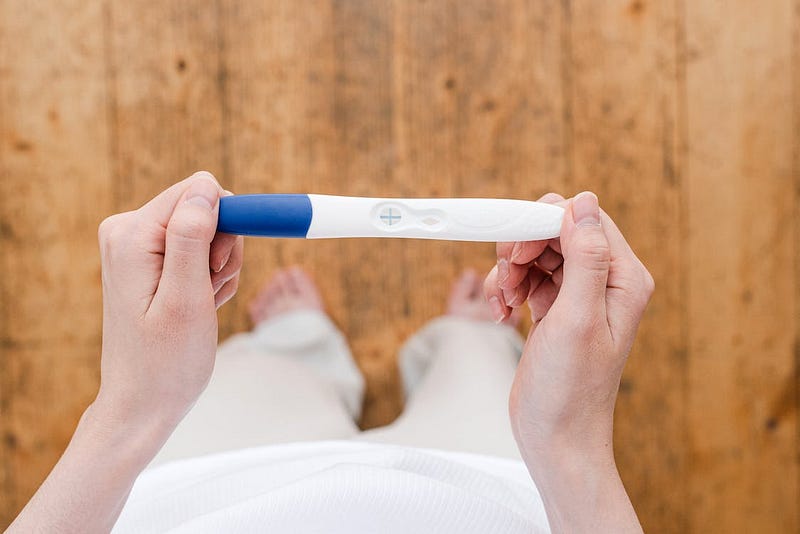
It’s not just that people don’t care about your bodily autonomy when they treat pregnancy as the default, it’s not just that they expect you to be pregnant whether you want it or not, because it’s just what you do.
It’s that the expectation is that I should detransition just for the potential of babies I don’t want in future, all so I can undergo the uncomfortable and sometimes painful process of having my eggs harvested — let alone the detransition I’d have to undergo to become pregnant and carry a baby to term.
Why wouldn’t I be willing to sacrifice my sense of ownership or comfort or safety in my own body for a theoretical baby? Isn’t that what every woman do, and shouldn’t they feel happy to do it? Wouldn’t they be evil, and bad, and wrong, and unmotherly, if they dared to feel anything but grateful and good about the whole thing?
As a transgender person, my right to control and make decisions about my own body is already continuously and constantly a subject of public debate — the transgender body is discussed in theory, the danger it poses in the public sphere, or if children find out it exists, or if someone’s attracted to it by accident when they identify as anti-trans.
As a transgender person with the theoretical capacity to get pregnant, I’m accosted with the misogynistic assertion that anyone society has decided is and should be a woman should also be a mother, and should be treated as a mother-to-be whether they want children or not.
I say “theoretical capacity”, by the way, because there is no reason to assume I’m actually fertile in the first place, even before I started testosterone. I might have a defect in my womb or my ovaries or my fallopian tubes. I might be tended to miscarriages, or otherwise not be able to carry a pregnancy to term. I might not even be ovulating.
I don’t actually know if I don’t try, and if I don’t get tested — the assumption is simply that I would be fertile, and in the event that I wasn’t, that I’d be immediately willing and ready to undergo any medical treatment and the costs incurred by it. More than that, I would hopefully be so embarrassed at any fertility issues I had that I would talk about it as little as possible publicly, or only refer to it if in an inspiring tour de force I did become pregnant and had a miracle baby, thus maintaining the invisibility of fertility issues, and the silence on them in general conversation.
The assumption that all young adults are fertile and/or able to carry a pregnancy is much like the assumption that all of them will get someone pregnant or get pregnant themselves — it’s about maintaining the idea that pregnancy and having children is the default.
As soon as one begins to consider the complexities and the nuances here, that ideological default falls apart.
It’s exhausting sometimes, trying to exist in a world where such a simple thing as rights over my own body are something I have to be on the defensive about — as someone with a womb, I’m not doing my duty to fill it up with a baby or two; as a trans man, I’m not doing my duty as a woman and a mother; as a white trans man, white supremacists are angry I’m not doing my duty as a white woman by birthing the next generation of white babies.
I get it enough from everywhere else without getting it at the doctor as well. I wish they’d prioritise my health rather than my ability to birth a child I’ve never even wanted.
Leave a Reply